

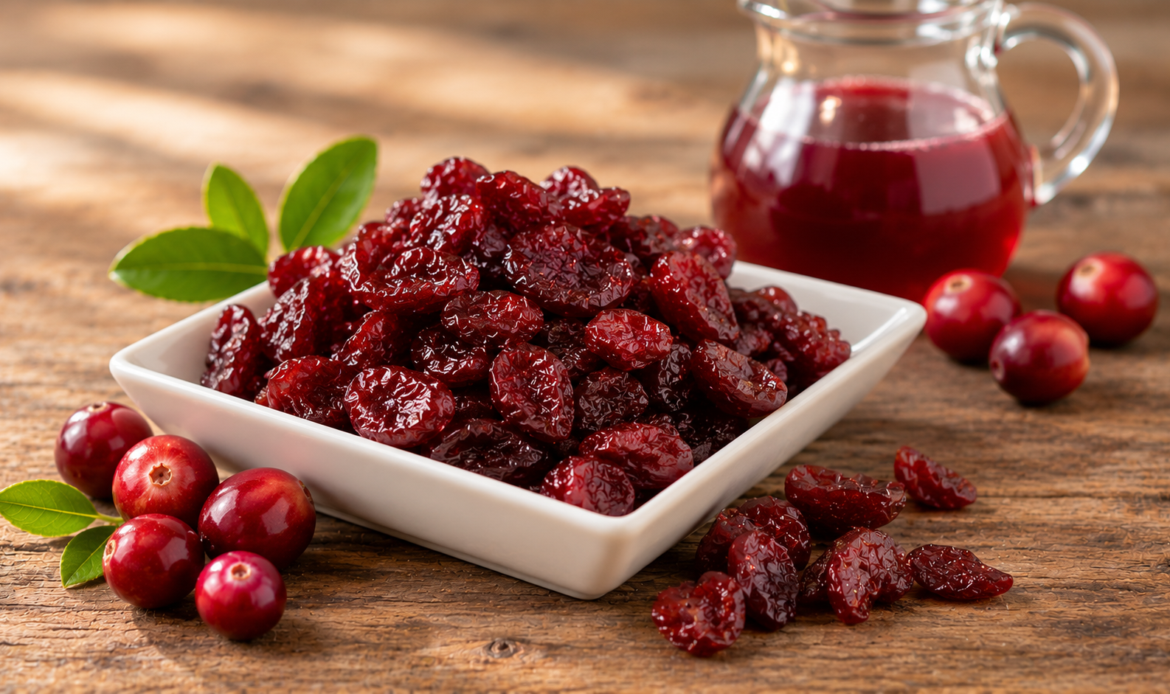
Sweetened dried cranberries are made by soaking fresh or frozen cranberries in a sugar or juice syrup, a step called infusion, and then drying them to a chewy, shelf-stable texture. Cranberries are naturally so tart and so low in sugar that drying them plain gives a hard, sour piece most people won’t eat. Infusion replaces some of the berry’s water with sweetener before drying, which softens the flavor and keeps the finished piece tender. The same basic process is used for infused blueberries and strawberries, and it’s why infused fruit is a staple in bars, cereal, trail mix, and baked goods.
Why can’t cranberries just be dried plain?
Cranberries can be dried plain, but the result is very sour, tough, and not very pleasant to eat. Fresh cranberries have far less natural sugar than grapes, cherries, or apples, and much of their flavor comes from acid. When the water is removed, that acid gets more concentrated and the berry turns hard.
Their structure is another problem. Cranberries have a tough, waxy skin that slows drying, so the berries are usually sliced or scored before processing. Infusing them with syrup gives the dried piece a balanced sweet-tart flavor and a softer chew that works in finished foods.
How does the infusion process work?
Infusion works by soaking the berries in a syrup that’s more concentrated than the fruit’s own juice. Over several hours, water moves out of the berry and sugars from the syrup move in. The berry ends up with less water and more soluble solids, which is exactly what you want before drying.
The process usually follows a sequence like this:
- Cranberries are cleaned, sorted, and sliced or scored so the syrup can get in
- The berries soak in a sugar syrup, a fruit juice concentrate, or a blend of the two
- The infused berries are drained and dried with warm air to a target moisture level
- A light coating of vegetable oil is usually applied so the pieces don’t stick together
Processors adjust the syrup strength, the soak time, and the drying conditions to hit a specific sweetness, texture, and moisture level. That control is one of the main reasons infused fruit is so consistent from lot to lot.
What can be used to infuse cranberries?
Cranberries can be infused with cane sugar, fruit juice concentrates like apple or pineapple juice concentrate, or blends designed to lower the added sugar. The choice affects the label as much as the flavor.
Juice-infused cranberries appeal to brands that want to avoid “sugar” as a separate ingredient, though juice concentrate still counts toward added sugars on a nutrition label. Reduced-sugar infusions use alternative sweeteners or soluble fiber to replace part of the sugar. Each option changes the taste, texture, and cost, so it’s worth testing more than one if your label claims are important.
How do infused cranberries behave in manufactured foods?
Infused cranberries are popular in manufacturing because they hold their shape, stay chewy, and have a water activity that works with many bars and baked goods. The infusion step also makes them more stable in color and flavor during storage than plain dried berries.
How do infused cranberries work in bars and cereal?
In bars, infused cranberries add visible fruit and a sweet-tart flavor that balances nuts, oats, and chocolate. Their moisture level is close to many chewy bar bases, so the fruit and the bar stay soft together. In cereal and granola, cranberries are often dried a bit further so they don’t soften the flakes. Our Nutrition and Snack Bars and Cereal and Granola pages go into more detail.
How do infused cranberries work in baking?
In baking, infused cranberries hold up well in cookies, muffins, scones, and breads because the sugar from infusion helps them keep their shape and color in the oven. Bakers sometimes choose a slightly softer, higher-moisture cranberry for soft-baked goods so the fruit doesn’t dry out during baking. See our Bakery page for more on fruit in baked goods.
How do sweetened dried cranberries affect a nutrition label?
Sweetened dried cranberries add sugar to a nutrition label, and most of it counts as added sugar because it comes from the infusion syrup rather than the berry itself. That’s true whether the syrup is cane sugar or fruit juice concentrate, since juice concentrate used as a sweetener is generally treated as an added sugar.
For brands working toward a lower added-sugar number, there are a few levers. Reduced-sugar infusions replace part of the sugar with soluble fiber or other sweeteners. Using a smaller cut, such as diced instead of whole berries, can spread the same flavor across the product at a lower usage rate. Pairing cranberries with naturally sweeter dried fruits like apples or cherries can also bring the overall added sugar down. Check any claims with your regulatory team, because the rules on how infused fruit is labeled are specific.
What cut styles are available?
Infused cranberries are commonly available whole, sliced, halved, or diced. Whole and sliced berries give the familiar look shoppers expect in trail mix and salads. Diced pieces spread more evenly through bars, cereal, and baked goods and are less likely to drag when a bar is cut.
Some processors also offer extra-low-moisture cranberries for cereal and dry mixes, and softer, higher-moisture berries for bakery. If your product has a specific texture target, ask which moisture levels your supplier can provide for each cut.
What other fruits are infused this way?
Blueberries and strawberries are commonly infused the same way, along with cherries and some tropical fruits. Blueberries have a waxy skin like cranberries, so they’re often treated to let syrup in. Strawberries are softer and need gentler handling so they keep their shape.
Unique Ingredients supplies infused cranberries, cultivated blueberries, wild blueberries, and strawberries. You can compare them on our Infused Fruits page.
What should you check on an infused cranberry spec sheet?
Start with moisture, water activity, and sugar content, since those decide how the cranberries will taste and how they’ll behave in your product over time. A complete spec sheet should also include:
- The infusion medium, such as sugar, juice concentrate, or a reduced-sugar blend
- The type and amount of oil used as a coating
- Cut style, such as whole, halves, sliced, or diced
- Color and defect limits, including stems and capstems
- Microbiological limits, shelf life, and storage conditions
- Allergen statement and food safety certification
If you’re switching suppliers, test samples in your own formula. Cranberries with similar numbers on paper can still differ in chew and flavor.
How can you avoid supply problems with infused cranberries?
Cranberries are harvested once a year, so supply and pricing depend on the crop. Buyers who rely on a single source can get caught short in a tight year. Working with a supplier that sources from more than one processor and holds inventory close to your plant lowers that risk.
Unique Ingredients keeps infused fruit stocked in regional warehouses, so most orders arrive in one to two days. Our quality team is on site at every source facility before we buy.
If you’re developing a new product or comparing cranberries, talk to our team about samples and specs.
Frequently asked questions
Why are dried cranberries coated with oil?
A light oil coating keeps the sticky, infused pieces from clumping in the bag and helps them flow through manufacturing equipment. The amount is small, and the oil type is listed on the spec sheet and ingredient statement.
Are there unsweetened dried cranberries?
Yes, but they’re uncommon in manufacturing because they’re very tart and tough. Most products that want lower sugar use reduced-sugar or juice-infused cranberries instead.
Is “infused” the same as “sweetened”?
In the ingredient trade, the terms usually describe the same thing. Infusion is the process of soaking fruit in syrup before drying, and the syrup is what sweetens the berry.
How long do infused cranberries last?
Infused cranberries are typically shelf-stable for about a year when stored sealed in a cool, dry place. Check the spec sheet for the exact shelf life.
Can I get samples of different infusion types?
Yes. Contact our team with your application, and we’ll help you choose infusion types and cuts to test side by side.