

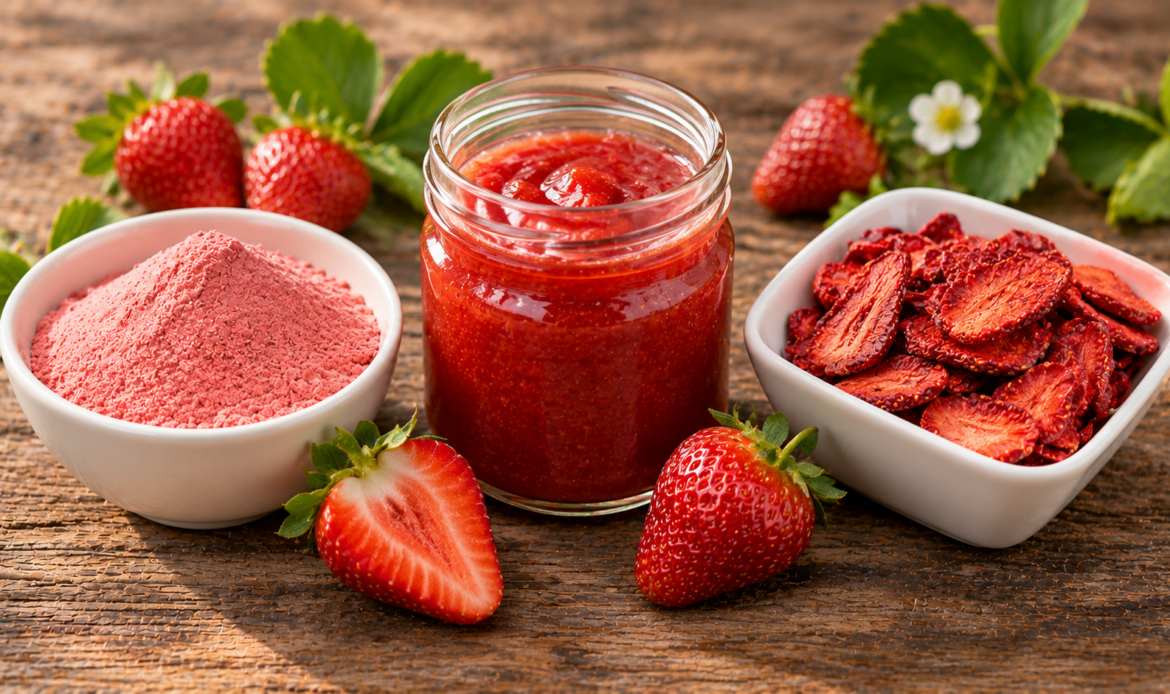
Choosing between fruit powder, puree, and dried pieces comes down to three questions: how much moisture your product can take, whether you want the fruit to be visible, and how your plant handles ingredients. Powders blend evenly into dry mixes and add flavor without water. Purees bring fresh fruit flavor, color, and moisture to products that can handle it, like beverages, fillings, and sauces. Dried pieces give shoppers visible fruit and texture in bars, cereal, snacks, and baked goods. Many products use two formats together, such as a powder for flavor throughout and pieces for visual appeal.
How do the three formats compare?
The three formats differ mainly in moisture, how they deliver flavor, and how they look in the finished product. A quick comparison:
- Powder: very low moisture, blends evenly, no visible pieces, easy dry handling, stores on a shelf
- Puree: high moisture, fresh fruit flavor and color, pumpable, needs aseptic or frozen storage
- Dried pieces: low to moderate moisture, visible fruit and chewy or crisp texture, easy to measure, stores on a shelf
No format is better across the board. The right choice depends on your product, your process, and what you want the shopper to see on the label and in the product itself.
When should you use fruit powder?
Use a powder when you want fruit flavor and color spread evenly through a product without adding water or visible pieces. Powders work well in bar binders, cereal coatings, baking mixes, seasonings, drink mixes, and smoothie blends.
They’re also the easiest format to handle in a dry-blend plant. They can be weighed and mixed like flour or sugar, and they don’t need thawing or special storage. The main things to watch are caking, since powders pull moisture from humid air, and flavor strength, since some powders taste milder than you might expect at low usage levels. Apple powder is one of the most common, and our apple powder page covers its specs.
When should you use fruit puree?
Use puree when your product can take moisture and you want the fullest fresh fruit flavor and color. Purees are a natural fit for beverages, smoothies, yogurt fruit preparations, sauces, fillings, and fruit snacks or leathers.
Puree is mostly water, so it doesn’t work well in low-moisture products like crunchy bars or cereal unless that water is cooked or dried off. It also needs more careful handling. Aseptic puree stays shelf-stable until opened, while frozen puree needs freezer space and thawing. Once opened, puree should be used within days. See our Fruit Purees page for the fruits we supply.
When should you use dried fruit pieces?
Use dried pieces when you want the shopper to see and taste distinct bits of fruit. Pieces are the main format in bars, cereal, granola, trail mixes, baked goods, and snack mixes, and they’re often the reason a shopper picks up the product.
Dried pieces come plain or infused, in many cut sizes and moisture levels. Low-moisture pieces stay crisp in cereal. Chewier, infused pieces suit bars and baked goods. The main challenge is matching the fruit’s moisture to the rest of the product so the texture holds up over shelf life. Our Dried Fruits, Infused Fruits, and Dried Apples pages cover the range.
How does moisture decide the format?
Moisture is often the deciding factor because it affects texture, shelf life, and processing. A crunchy bar or cereal can’t take much added water without going soft or needing longer drying. A beverage or sauce, on the other hand, already has plenty of water, so a puree fits right in.
Water activity is the number to watch. Ingredients in the same product should have similar water activity so moisture doesn’t move from one to another over time. A powder or a low-moisture piece fits easily into a dry product. A puree in a dry product usually means extra drying, which adds cost and can dull flavor.
How does each format affect flavor and color?
Purees usually deliver the freshest, fullest fruit flavor and the brightest color, especially berries, since they keep the whole fruit’s juice and pulp. Powders deliver concentrated flavor, but drying can soften some of the fresh notes and darken the color. Dried pieces deliver flavor in bursts, so the overall impression depends on how many pieces land in each bite.
For many products, combining formats gives the best result. A strawberry bar might use a small amount of powder in the binder for color and a base strawberry flavor, plus infused strawberry pieces for visible fruit and bigger bursts of taste.
How does each format affect handling and cost?
Dry formats are generally easier and cheaper to store and handle. Powders and dried pieces ship and store at room temperature, measure easily, and keep for months. Purees cost more to ship and store per pound of fruit solids because they’re mostly water, and frozen puree adds the cost of cold storage and thawing.
On the other hand, puree can be pumped directly into a process, which suits high-volume beverage and filling lines. Compare formats on a total delivered and stored cost basis, including freight, storage, labor, and waste, rather than price per pound alone.
How does each format affect the label?
All three formats can read as fruit on the ingredient statement, which is a big part of their appeal. Plain powders, purees, and dried pieces usually list just the fruit, and infused pieces list the infusion syrup as well.
Visible pieces have an extra advantage on pack. A shopper who can see blueberries in a bar trusts the “made with real fruit” message more. If visible fruit is part of your brand story, pieces are hard to replace, even if a powder carries most of the flavor.
What should you ask a supplier about each format?
Ask the same core questions for every format, then add a few that are specific to each one. For all formats, ask for a full spec sheet, a certificate of analysis for each lot, shelf life and storage conditions, and food safety certification.
For powders, ask about particle size, flow agents, and how the powder behaves in humid conditions. For purees, ask about Brix, viscosity, seed removal, and whether the product is aseptic or frozen. For dried pieces, ask about moisture, water activity, cut size, infusion syrup, and oil coating. If you’re testing more than one format, request samples of each from the same fruit so you can compare them fairly in your own formula.
Which format should you choose for common products?
As a starting point for common products:
- Crunchy cereal and granola: low-moisture pieces, with a powder in coatings
- Chewy bars: infused or chewy pieces, with a powder or concentrate in the binder
- Baked goods: dried or infused pieces, with puree in fillings
- Beverages and smoothies: puree or juice concentrate, with powders for dry mixes
- Snack seasonings and coatings: powder
- Pet food: powders and small pieces, depending on the product
Our Applications pages go into each category in more detail. If you’re comparing formats for a new product, talk to our team about samples of each. Unique Ingredients stocks fruit in regional warehouses, so most orders arrive in one to two days.
Frequently asked questions
Can a powder replace puree in a recipe?
Sometimes. A powder can replace the fruit solids from a puree, but you’ll need to add water separately and adjust for differences in flavor and color. It works best in dry or low-moisture products.
Are freeze-dried powders different from other fruit powders?
Yes. Freeze-dried powders often keep brighter color and fresher flavor because the fruit isn’t exposed to much heat, but they usually cost more. Air-dried and drum-dried powders are more common in high-volume manufacturing.
Do fruit pieces sink in batters?
They can, especially larger or heavier pieces in thin batters. Smaller cuts, lighter pieces, and tossing the fruit in a little flour before mixing all help.
Which format has the longest shelf life?
Powders and low-moisture dried pieces usually have the longest shelf life when stored sealed, cool, and dry. Aseptic puree also keeps well until opened.
Can I test several formats at once?
Yes. Many formulators run a powder, a puree, and pieces side by side. Contact our team, and we’ll help you choose samples.