

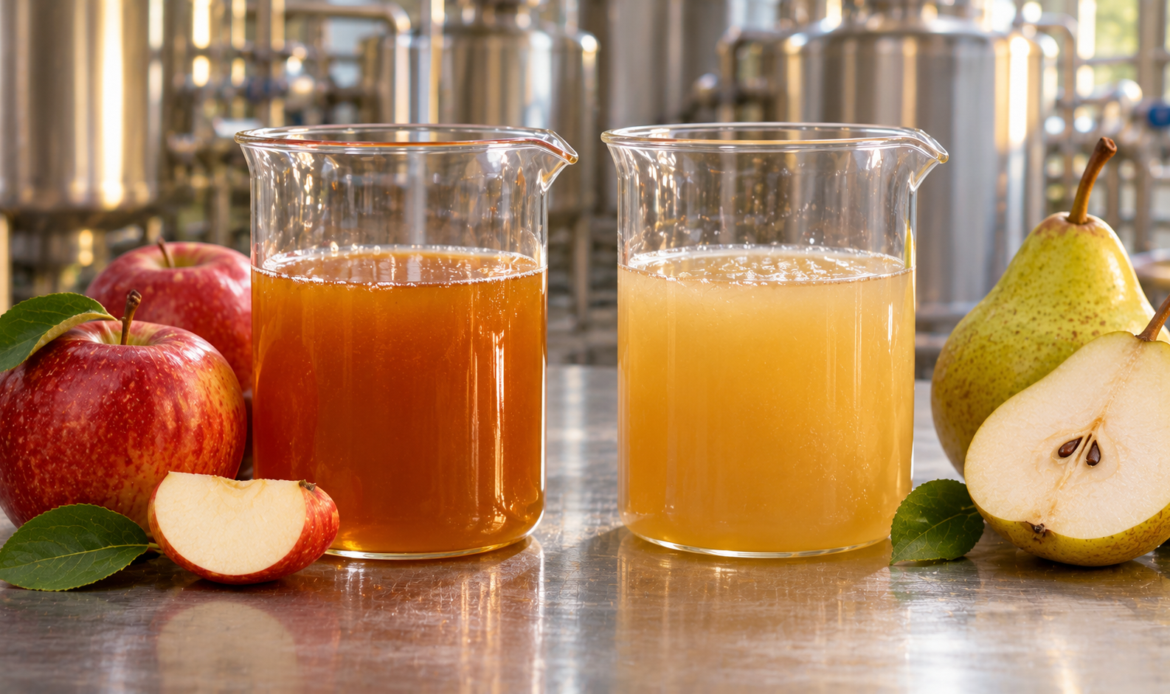
Fruit juice concentrate is fruit juice that has had most of its water removed, leaving a thick, sweet syrup that’s usually around 70 percent sugar solids for apple and pear. Manufacturers use it as a natural sweetener, a flavor base, and a binder in beverages, bars, baked goods, sauces, and infused fruits. Because the water is gone, it takes up far less space to ship and store than single-strength juice, and it can be diluted back to juice or used as is. Apple and pear concentrates are the most common sweetening concentrates because their flavor is mild enough to work in almost any product.
How is juice concentrate made?
Juice concentrate is made by pressing fruit, clarifying or straining the juice, and then evaporating most of the water under carefully controlled heat, usually under vacuum so the juice can boil at a lower temperature. The aroma compounds that escape during evaporation are often captured and added back so the finished concentrate keeps more of the fruit’s natural flavor.
Clear concentrates are filtered and treated with enzymes to remove pectin and haze. Cloudy concentrates keep more of the fruit’s natural particles for a fuller body and appearance. The finished product is cooled, tested, and packed in drums, totes, or bulk tankers.
What does Brix mean for a concentrate?
Brix measures the sugar solids in a liquid, roughly as a percentage by weight. Single-strength apple juice is usually around 10 to 12 Brix. Apple and pear concentrates are typically about 70 Brix, which means they’re around six to seven times more concentrated than juice.
Brix matters for two reasons. It tells you how much sweetness and fruit solids you’re adding per pound, and it tells you how much water to add if you’re reconstituting the concentrate back to juice. Spec sheets also list acidity, because the balance of sugar and acid shapes how the concentrate tastes in your product.
How do manufacturers use fruit juice concentrate?
Manufacturers use it as a sweetener and flavor in a wide range of products. Here are the most common uses.
How is concentrate used in beverages?
In beverages, concentrate is diluted to make juice, juice blends, and juice drinks, or added in smaller amounts to sweeten and flavor teas, sparkling drinks, smoothies, and functional beverages. Apple and pear concentrates are popular bases for juice blends because they let stronger, more expensive fruits stand out while keeping costs in check.
How is concentrate used in bars and snacks?
In bars, concentrate works as part of the binder system, adding sweetness and helping hold oats, nuts, and fruit together. It’s also used in fruit snacks and fruit leathers alongside purees. Because it’s a liquid sweetener, formulators balance it with dry ingredients to keep water activity where it needs to be. See our Nutrition and Snack Bars page for more.
How is concentrate used in bakery?
Bakers use juice concentrate to sweeten and add moisture to muffins, cookies, cakes, and fillings, often as part of a recipe that replaces some cane sugar. It browns during baking and adds a light fruit note. Our Bakery page covers fruit ingredients in baked goods.
How is concentrate used in infused fruit?
Juice concentrate is a common infusion syrup for dried fruits like cranberries and blueberries. Juice-infused fruit appeals to brands that want a fruit-based sweetener on the ingredient list, though it still adds sugar to the label.
Does juice concentrate count as added sugar?
In most cases, yes. When fruit juice concentrate is used to sweeten a food rather than to make juice, it’s generally counted as added sugar on the nutrition label. That surprises some brands that switch from cane sugar to juice concentrate expecting a lower added-sugar number.
The ingredient statement still reads as fruit, which many shoppers prefer. Labeling rules here are specific, so confirm wording and claims with your regulatory team before finalizing packaging.
Why choose apple or pear concentrate?
Apple and pear concentrates are popular because they’re mild, widely available, and relatively affordable compared with berry or tropical concentrates. Their gentle flavor sweetens a product without making it taste like apple or pear, especially at lower usage levels.
Apple concentrate has a slightly brighter, more acidic profile. Pear concentrate is often a bit softer and rounder in flavor, which some formulators prefer in products where acidity could clash. Both can be used alone or blended with other fruit concentrates.
Unique Ingredients supplies apple juice concentrate and pear juice concentrate. You can see both on our Fruit Juice Concentrates page.
How is juice concentrate packed and shipped?
Juice concentrate is usually packed in lined steel drums, large totes, or bulk tanker trucks for very high-volume users. Drums suit smaller and mid-size plants, while totes reduce handling and packaging waste for larger users. Many concentrates ship refrigerated or frozen to protect quality in transit.
The right format depends on how fast you use it once opened. A tote you can’t finish in a reasonable time can lead to waste, while frequent small drums add handling. Ask your supplier which formats they offer and how long each stays in spec after opening under your plant’s conditions.
How should juice concentrate be stored?
Most apple and pear concentrates should be stored refrigerated, typically below about 40°F, or frozen for longer storage. The high sugar content slows spoilage, but at warmer temperatures concentrate can darken, lose flavor, and become more prone to fermentation over time.
Keep containers sealed until use, and once a drum or tote is opened, use it within the time your supplier recommends. If concentrate has been frozen, it may thicken or develop some crystals, which usually disappear with gentle mixing as it warms. Follow the spec sheet for exact storage conditions and shelf life.
What should you check on a concentrate spec sheet?
Start with Brix, acidity, and color, since those three decide sweetness, flavor balance, and appearance. A complete spec sheet should also include:
- Clarity or turbidity, depending on whether the concentrate is clear or cloudy
- Microbiological limits, including yeast and mold
- Packaging format and size, such as drums or totes
- Storage conditions and shelf life
- Allergen statement and food safety certification
- Organic or other certifications if your label needs them
If you’re switching suppliers, request a sample and run it in your actual formula. Small differences in acidity or color can change how a finished product tastes and looks.
How do lead times affect a concentrate program?
Concentrate is heavy and often ships in large containers, so freight and storage are a big part of the total cost. A supplier that holds stock near your plant can deliver smaller, more frequent orders, which reduces the amount of cold storage you need and the risk of product aging in your warehouse.
Unique Ingredients holds inventory in regional warehouses near major manufacturing markets, so most orders arrive in one to two days, and our quality team visits every source facility before we buy. Our Logistics and Import page explains how we manage freight and import for you.
If you’re adding concentrate to a formula or reviewing suppliers, talk to our team about samples and specs.
Frequently asked questions
How do you reconstitute juice concentrate back to juice?
Add water until the Brix matches single-strength juice, usually around 10 to 12 Brix for apple. For a 70 Brix concentrate, that’s roughly one part concentrate to six or seven parts water by volume, though exact ratios should be calculated by weight using the spec sheet.
Is “not from concentrate” juice better?
It’s a different product. Not-from-concentrate juice is pasteurized and stored without removing water, which costs more to ship and store. Concentrate is more efficient for manufacturing and can taste very close to fresh juice when aroma is recovered.
What’s the difference between juice concentrate and fruit puree?
Juice concentrate is filtered juice with water removed, so it has little or no pulp or fiber. Puree keeps the whole fruit’s pulp and fiber, and it’s much less sweet by weight.
Can juice concentrate replace sugar in a recipe?
It can replace some or all of the sugar in many recipes, but it adds liquid and acidity. Formulas usually need adjustments to liquid, leavening, or bake time.
Is organic juice concentrate available?
Yes, many concentrates are available as certified organic. Ask for the organic certificate along with the spec sheet.