

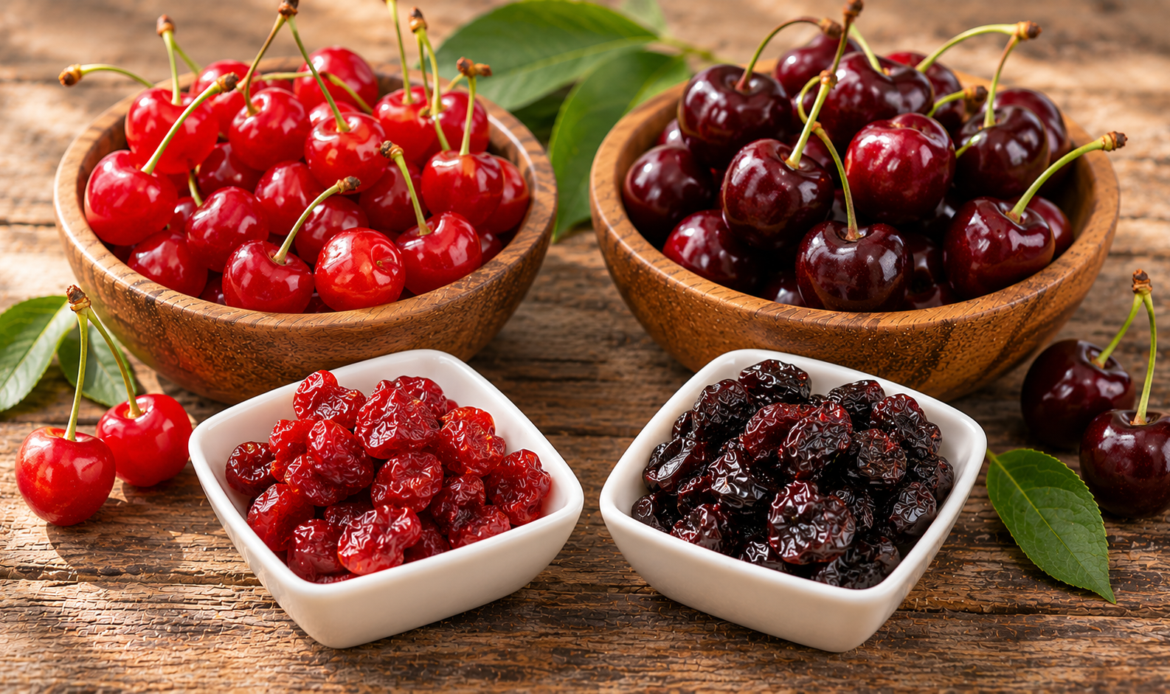
The main difference in tart cherries vs sweet cherries is flavor. Tart cherries are bright red, sour, and tangy, while sweet cherries are dark red to near black, mild, and sugary. That difference changes how each one is grown, processed, and used. Tart cherries are mostly sold processed, as dried, frozen, juice, or concentrate, because they’re too sour and soft to sell well fresh. Sweet cherries are mostly eaten fresh, and a smaller share goes to processing. In bars, cereal, trail mixes, and baked goods, tart cherries give a sharp, fruity bite, and sweet cherries give a softer, darker fruit flavor.
What are tart cherries?
Tart cherries, also called sour cherries, are a different species from the sweet cherries sold fresh in grocery stores. Montmorency is the most common tart variety in North American processing, and it’s known for its bright red color and sharp, tangy flavor.
Tart cherries are soft and bruise easily, and their high acidity makes them hard to eat out of hand. For those reasons, most of the crop is harvested mechanically and sent straight to processing. Growers usually shake the trees to drop the fruit, and the cherries are cooled quickly and pitted before they’re frozen, dried, juiced, or made into concentrate.
What are sweet cherries?
Sweet cherries are the dark, firm cherries most people buy fresh in summer. Common varieties include dark red cherries like Bing and lighter, yellow-blushed cherries like Rainier. They’re larger and firmer than tart cherries, with much higher natural sugar and lower acidity.
Most sweet cherries are grown for the fresh market, where they bring a higher price. A smaller share goes to processing, including dried cherries, frozen cherries, and the maraschino-style cherries used in desserts and baking.
How do tart cherries vs sweet cherries compare in a finished product?
In a finished product, the two cherries differ in flavor, color, texture, and how much sweetener they need. Here’s how they typically compare:
- Flavor: tart cherries are tangy and bright, while sweet cherries are mild and rich
- Color: tart cherries are bright red, while sweet cherries are dark red to purple
- Sweetness: dried tart cherries are usually infused with sugar or juice, while dried sweet cherries often need little or no added sweetener
- Texture: both are chewy when dried, though sweet cherries tend to be a bit firmer and meatier
- Pairing: tart cherries balance chocolate, nuts, and oats, while sweet cherries pair well with vanilla, almond, and dark chocolate
Neither is better in general. The choice depends on whether you want the cherry to cut through a rich product or blend into it.
How are dried tart cherries made?
Dried tart cherries are usually pitted, infused with a sugar or juice syrup, and then dried to a chewy texture. Infusion is needed because tart cherries are so sour that plain dried tart cherries taste harsh to most people. The syrup softens the acidity and keeps the dried cherry tender.
Processors can adjust the infusion to change sweetness, and some offer reduced-sugar or juice-infused options. A light coating of oil is often added after drying to keep the pieces from sticking. Our post on how sweetened dried cranberries are made explains the infusion process in more detail.
Which cherry works best in bars and cereal?
Tart cherries are a popular choice for bars, granola, and trail mixes because their tangy flavor balances sweet binders, chocolate, and nuts. A tart cherry and dark chocolate bar is a familiar combination for good reason. Diced tart cherries spread more evenly through a bar and cut cleanly.
Sweet cherries work well in products with a richer, dessert-style profile, like cherry-almond bars or cherry vanilla granola. They also help when a brand wants to keep added sugar low, since they need less infusion. Our Nutrition and Snack Bars and Cereal and Granola pages cover fruit selection for these categories.
Which cherry works best in baking?
In baking, tart cherries are the traditional choice for pies and fillings because their acidity stays bright after baking. Dried tart cherries hold up well in cookies, scones, muffins, and breads, adding pops of tangy flavor.
Sweet cherries work well in cakes, quick breads, and cookies where a softer, sweeter fruit flavor fits the product. They tend to darken more when baked, which can be appealing in chocolate products. Our Bakery page covers more on fruit in baked goods.
What formats are cherries available in?
Both types of cherry are available in several formats for manufacturing. Dried cherries are the most common in bars, cereal, trail mix, and baked goods, and they’re usually sold whole, halved, or diced. Diced cherries spread more evenly and cut more cleanly in bars, while whole cherries make a stronger visual statement in mixes and baked goods.
Tart cherries are also widely sold frozen, as juice, and as juice concentrate, and tart cherry concentrate is common in beverages and supplements. Sweet cherries are sold frozen and in brined or syruped forms for desserts and baking. If your product needs a cherry flavor without visible pieces, a concentrate or puree may work better than dried fruit.
How do dried cherries affect added sugar on a label?
Dried tart cherries usually add some added sugar to a label because of the infusion step. Dried sweet cherries can often be produced with little or no added sugar because the fruit is naturally sweeter. That difference can matter for brands working toward a lower added-sugar number.
There are ways to lower added sugar with tart cherries too. Reduced-sugar infusions, juice-infused options, smaller dice sizes, and blends with naturally sweeter fruits can all help. Confirm label wording with your regulatory team, since the rules on infused fruit and juice concentrate are specific.
How does cherry supply vary from year to year?
Cherry supply can swing sharply from year to year because cherries bloom early and are sensitive to spring frost. A single cold night during bloom can cut a region’s crop significantly. Tart cherries are especially exposed because most processing supply comes from a limited number of growing areas.
That makes cherries a fruit where buyers benefit from planning early and keeping more than one sourcing option. A supplier with relationships across several processors and regions is better placed to keep product moving in a short year. Our Supply Continuity page explains how we plan for crop swings.
What should you check on a dried cherry spec sheet?
Start with moisture, sugar content, and pit specification, since those decide how the cherries will eat, how they’ll affect your label, and how much risk they carry for your customers. A complete spec sheet should also cover:
- Infusion medium for tart cherries, such as sugar, juice concentrate, or a reduced-sugar blend
- Oil coating type and amount, if any
- Cut style, such as whole, halved, or diced
- Color and defect limits, including stems and pit fragments
- Shelf life, storage conditions, and food safety certification
Pit control deserves a direct conversation. Ask how the processor inspects for pits and pit fragments and what the allowed level is per pound, since even a rare pit can lead to a customer complaint.
Where can you source dried cherries?
Unique Ingredients supplies both dried tart cherries and dried sweet cherries as part of our Dried Fruits line. Inventory is held in regional warehouses near major manufacturing markets, so most orders arrive in one to two days, and our quality team is on site at every source facility before we buy.
If you’re choosing between tart and sweet for a new product, talk to our team about samples. Tasting both in your own formula is the quickest way to decide.
Frequently asked questions
Are tart cherries and sour cherries the same thing?
Yes. “Tart cherry” and “sour cherry” describe the same type of cherry. Montmorency is the most common tart variety used in processing.
Do dried tart cherries have added sugar?
Most do, because tart cherries are infused with sugar or juice before drying to balance their acidity. Reduced-sugar options are available. Check the ingredient statement on the spec sheet.
Can I use tart and sweet cherries together?
Yes. Some products blend them to get both tangy brightness and a deeper cherry flavor. A blend can also help balance cost and color.
Do dried cherries contain pits?
Dried cherries for manufacturing are pitted, but pitting equipment isn’t perfect. Ask your supplier about their pit specification and how they check for pits and pit fragments.
Can I get samples of both?
Yes. Contact our team with your application, and we’ll send tart and sweet cherry samples to compare.