

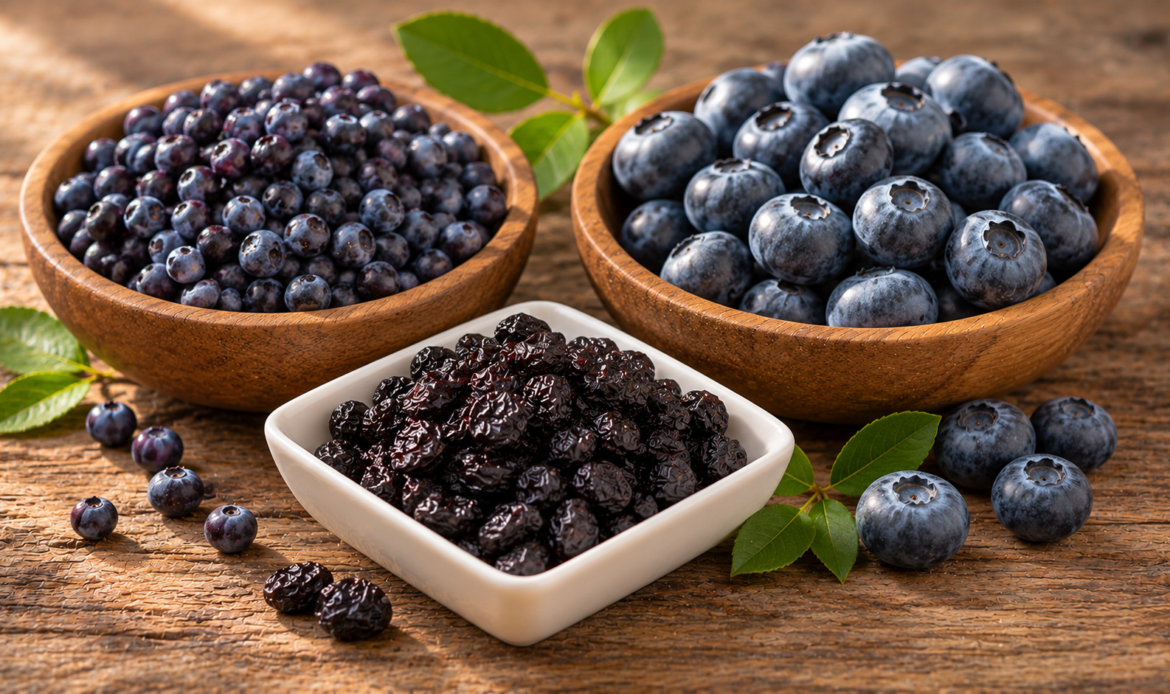
The main differences in wild vs cultivated blueberries come down to size, flavor intensity, and how they’re grown. Wild blueberries are small, deeply colored berries with a strong, tangy flavor that grow on low bushes spread naturally across managed fields. Cultivated blueberries are the larger, milder berries most people buy fresh, grown on taller bushes planted in rows. In manufacturing, wild blueberries give you more berries per bite and more color, while cultivated blueberries give you bigger, more visible pieces and a gentler flavor. Both work well dried, infused, or pureed, so the choice depends on what the product needs.
How are wild blueberries grown?
Wild blueberries are grown on low, spreading plants that are native to their growing areas and aren’t planted in rows. Growers manage the existing fields by pruning, controlling weeds, and bringing in bees for pollination, but the plants themselves spread on their own through underground stems.
Because each field is a mix of many genetically different plants, wild blueberries vary in size, color, and flavor within the same harvest. Fields are usually cropped every other year, with a pruning year in between, which affects how much fruit is available in any one season.
How are cultivated blueberries grown?
Cultivated blueberries are grown on taller bushes that are planted, bred, and managed much like other orchard crops. Each field is usually planted with a known variety, so the berries are more uniform in size and ripening time.
Breeding has focused on large size, firm texture, and mild sweetness, which is why cultivated blueberries dominate the fresh market. Many varieties are grown in different regions with different harvest windows, which spreads supply across more of the year.
How do wild vs cultivated blueberries compare in a finished product?
The two types behave differently in a finished product because of their size and their skin-to-flesh ratio. Here’s how they usually compare:
- Size: wild berries are small and pea-sized, while cultivated berries are often two or three times larger
- Flavor: wild berries are more intense and tangy, while cultivated berries are milder and sweeter
- Color: wild berries have more skin for their size, which gives a deeper blue color and more color bleed into doughs and batters
- Distribution: smaller wild berries spread through a product more evenly, so more bites contain fruit
- Visibility: larger cultivated berries are easier to see on the surface of a bar or muffin
Neither is better overall. The right choice depends on whether you want blueberry flavor in every bite or big, visible berries that show up in product photos and on pack.
Which blueberry type works best in bars and cereal?
Wild blueberries are often the better fit for bars and cereal because their small size gives better distribution. In a bar that’s cut into thin portions, a large berry can drag or crumble along the cut. In cereal, small berries land in more spoonfuls. Infused wild blueberries also tend to have a concentrated flavor that holds its own against oats, nuts, and chocolate.
Cultivated blueberries still have a place in these products, especially when diced or when the brand wants larger, more noticeable fruit. See our Nutrition and Snack Bars and Cereal and Granola pages for more.
Which blueberry type works best in baking?
In baking, the choice comes down to look and color bleed. Wild blueberries give an even scatter of fruit and strong flavor, but their dark skins can tint batter blue-gray, especially in pale cakes and muffins. Cultivated blueberries bleed less for their size and give the classic “big berry” look in muffins and scones.
Dried and infused blueberries bleed much less than fresh or frozen berries, which is one reason bakeries use them. Our Bakery page covers fruit ingredients for baked goods in more detail.
Why do wild blueberries cost more?
Wild blueberries usually cost more because the supply is smaller and less predictable. Wild fields are cropped every other year, yields depend heavily on weather and pollination, and the growing area is limited compared with cultivated blueberries.
Prices for both types move with each year’s crop. A short wild blueberry harvest can raise prices sharply, while cultivated supply tends to be steadier because it’s spread across more regions and harvest windows. Buyers who use wild blueberries often plan contracts and inventory earlier in the season.
How does harvest timing affect blueberry supply?
Harvest timing affects supply because each type comes in on a different schedule. Wild blueberries have a short harvest window once a year, and fields are usually cropped every other year. Most of the year’s supply for processing is harvested within a few weeks and then frozen, dried, or infused for use over the following months.
Cultivated blueberries are harvested across a much longer window because different regions and varieties ripen at different times. That spread makes cultivated supply steadier, though weather in a major growing area can still affect price and availability.
For buyers, this means planning wild blueberry needs early, ideally before the harvest, and keeping some flexibility in formulas. A product that can use either type, or a blend, gives you more options in a short year. Our Crop and Market Intelligence page covers how we share crop updates with customers.
Can you swap one type for the other in an existing formula?
You can swap one type for the other, but expect to adjust the formula and retest the product. Because wild berries are smaller and more intense, replacing cultivated berries with the same weight of wild berries will usually give a stronger flavor, more color, and more pieces per serving. Going the other way, cultivated berries at the same weight can make the fruit seem sparse and the flavor milder.
Moisture and infusion level matter as much as the berry type. If the replacement berry has a different moisture content or sugar level, the bar or baked good can change texture over its shelf life. Run a side-by-side test, check water activity in the finished product, and hold samples for a few weeks before switching a production product.
How do the two types affect label and marketing claims?
The type of blueberry you use can shape what you say on the package. “Wild blueberries” is a recognizable phrase that many brands put front and center, and shoppers often see it as a premium ingredient. If you plan to call out wild blueberries on pack, make sure the ingredient you buy is documented as wild on the spec sheet and certificate of analysis.
The same care applies to any other claims tied to the fruit, such as organic or color-related marketing. Keep the documentation that supports each claim in your supplier file, and confirm with your supplier that the type and source are consistent from lot to lot.
What formats are available for both types?
Both types are available in several manufacturing formats, including infused dried berries, plain dried berries, purees, and powders. Infused blueberries are the most common choice for bars, cereal, and baked goods because infusion keeps them soft and balances their flavor.
Unique Ingredients supplies infused wild blueberries and infused cultivated blueberries, along with dried blueberries and blueberry puree. Inventory is held in regional warehouses, so most orders arrive in one to two days, and our quality team visits every source facility in person before we buy.
If you’re deciding between the two, the easiest test is to run both in your formula. Talk to our team about samples.
Frequently asked questions
Are wild blueberries more nutritious than cultivated blueberries?
Wild blueberries generally have more skin for their size, and the skin is where much of the berry’s color pigment is found. That gives them a higher concentration of those compounds by weight. Both types are nutritious, and any label claims should be backed by testing on the actual ingredient.
Can I use wild and cultivated blueberries together?
Yes. Some products blend them to balance flavor, visibility, and cost. A blend can give you the intense flavor of wild berries with some larger pieces for visual appeal.
Do dried blueberries bleed color in baking?
They bleed much less than fresh or frozen berries, but some color transfer is normal, especially with wild blueberries. Adding the berries late in mixing and choosing infused berries both help.
Is “wild blueberry” a regulated term?
Requirements can vary, so check how your supplier defines it and make sure your label and marketing claims match the actual ingredient. Your spec sheet should state which type of blueberry you’re buying.
Can I get samples of both types?
Yes. Contact our team with your application, and we can send wild and cultivated samples to test side by side.