

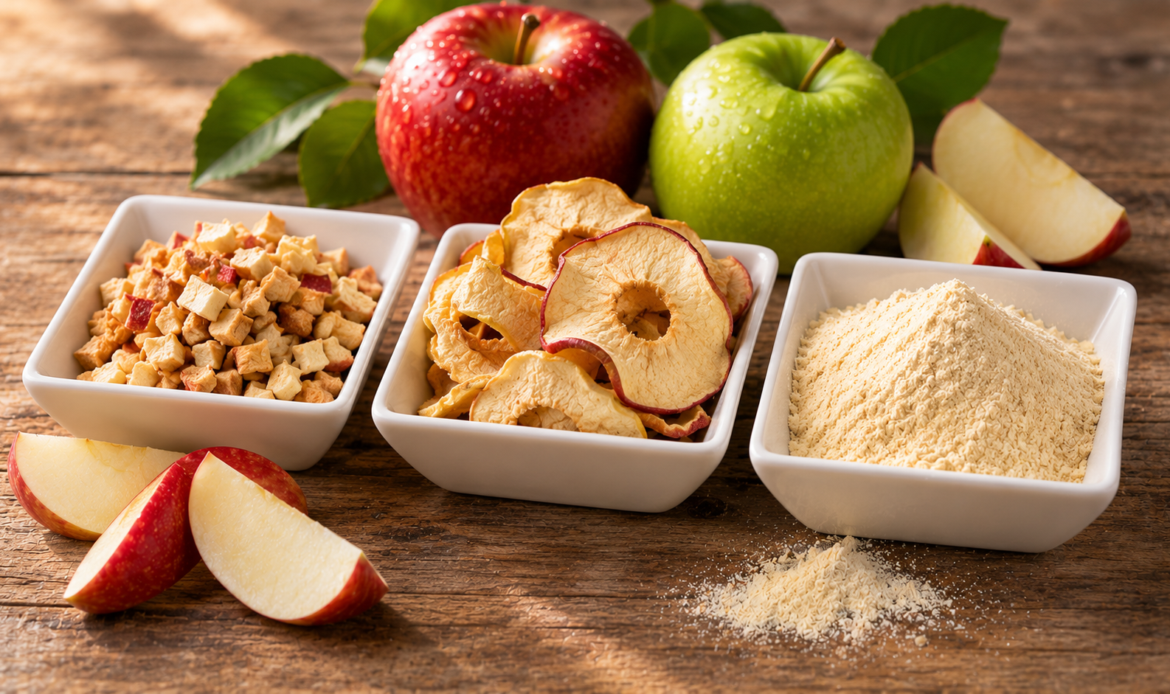
The main types of dried apple ingredients are evaporated apples, low-moisture apples, and apple powder, and the biggest difference between them is how much water is left in the fruit. Evaporated apples keep more moisture, typically around 18 to 24 percent, so they stay soft and chewy. Low-moisture apples are dried much further, so they’re crisp and shelf-stable in dry products like cereal. Apple powder is dried apple milled into a fine, free-flowing ingredient. Picking the right one comes down to the texture you want in the finished product and how much moisture your formula can handle.
Why does moisture content matter so much?
Moisture content matters because dried apple pieces trade water with the ingredients around them. A soft, moist apple piece in a crunchy cereal will give up water to the flakes, making the cereal soggy and the apple hard. A very dry apple piece in a moist bar will pull water in and change the bar’s texture over time.
That’s why formulators look at water activity as well as moisture percentage. Water activity measures how “available” the water in an ingredient is, and ingredients in the same product work best when their water activity is close. Matching the apple ingredient to the product keeps the texture stable from the day it’s made to the end of its shelf life.
What are evaporated apples?
Evaporated apples are apple pieces dried to a moderate moisture level, which leaves them soft, chewy, and close to the eating texture of a fresh-dried fruit snack. They’re the traditional dried apple, and they’re the most common choice for baking and for bars with a soft, chewy texture.
Evaporated apples come in rings, slices, wedges, and dices of several sizes. Because they keep more moisture, they’re a good fit for products that are moist themselves, like soft-baked cookies, muffins, fruit fillings, and chewy bars. They also rehydrate well in batters and fillings. Many evaporated apples are treated during processing to prevent browning, so check the ingredient statement on the spec sheet if your label has restrictions.
Unique Ingredients’ evaporated apples are available in a range of cuts for bakery and bar applications.
What are low-moisture apples?
Low-moisture apples are apple pieces dried until very little water remains, so they’re light and crisp rather than chewy. They’re made for dry products where a soft apple piece would cause trouble.
Cereal is the classic use. Low-moisture apple dices stay crunchy in the box and don’t soften the flakes or clusters around them. They’re also used in granola, instant oatmeal, dry baking mixes, trail mixes, and crunchy bars. In instant oatmeal and similar products, low-moisture pieces rehydrate quickly when hot water or milk is added.
Because they’re so dry, low-moisture apples can absorb moisture from humid air. Sealed packaging and dry storage keep them crisp. You can see sizes and formats on our low-moisture apples page.
What is apple powder?
Apple powder is dried apple that’s been milled and screened into a fine powder. It carries apple flavor, natural sugars, and fiber without visible pieces, which makes it useful in coatings, seasonings, baking mixes, bar binders, and drink mixes.
Powder is often used alongside pieces. A bar might use powder in the binder for even apple flavor and diced apples for visible fruit. Specs and formats are on our apple powder page.
What cut sizes are available for dried apple pieces?
Dried apple pieces are commonly available as rings, slices, wedges, and dices from large chunks down to small bits about an eighth of an inch across. Smaller dices spread through a product more evenly, while larger pieces make the fruit easy to see.
Choose the size based on how the product is eaten and how it’s made. A spoonful of cereal needs pieces small enough to land in most bites. A bar that’s cut into individual portions needs pieces small enough that the knife or slitter doesn’t drag them out. In baked goods, larger pieces give a more homemade look, while smaller dices hold up better in thin doughs.
Which dried apple ingredients are right for your product?
The right choice depends on how much moisture the rest of your product holds and the texture you want in the apple itself. As a starting point:
- Crunchy cereal, granola, and dry mixes usually call for low-moisture apples
- Soft-baked goods, fillings, and chewy bars usually call for evaporated apples
- Coatings, seasonings, drink mixes, and binders usually call for apple powder
- Products that need both even flavor and visible fruit often combine powder with pieces
Use these as starting points. Infused or sweetened apples, different cut sizes, and blends with other fruits all change the picture. Our Cereal and Granola, Nutrition and Snack Bars, and Bakery pages go into each category.
How do dried apples hold up during processing?
Dried apples hold up well in most manufacturing processes, but each format has limits worth knowing before a production run. Heat, moisture, and mechanical handling all affect the pieces differently.
In baking, evaporated apples can soften further and release some sugar into the surrounding dough, which is usually welcome in a muffin or soft cookie. Low-moisture pieces in a long bake can darken at the edges, especially in high-sugar doughs. In extruded snacks and cereals, apple is usually added after extrusion, because the heat and pressure of the extruder would break down visible pieces. Powder is the exception, since it can go into the dough before extrusion to add flavor.
Mechanical handling matters too. Very dry, crisp pieces can break into fines in pneumatic conveying or long mixing cycles, while chewy pieces can clump in a hopper on a humid day. If you’re running a new apple format, a short trial on the actual line will show these issues faster than a bench test.
How does the crop year affect dried apple supply?
Apples are harvested once a year, so supply and price for dried apple products move with each season’s crop. A late frost, a hailstorm, or a hot, dry summer in a major growing area can reduce the amount of processing fruit available, and processors compete for the apples that are left.
For manufacturers, the practical step is to plan purchases around the harvest calendar and to avoid relying on a single source. Suppliers who buy from several processors and growing regions can usually keep product moving when one area has a short crop. Our Crop and Market Intelligence page explains how we keep customers informed about the season ahead.
What should you ask a dried apple supplier?
Ask for a full spec sheet with moisture, water activity, cut size, color, and any processing aids or treatments listed. Ask how consistent those specs are from lot to lot, since a dried apple that drifts in moisture can change your product’s texture between production runs.
Lead time matters too. Dried apples are a crop-based ingredient, and supply can tighten in a short harvest year. Unique Ingredients holds dried apple inventory in regional warehouses near major manufacturing markets, so most orders arrive in one to two days, and our quality team visits every source facility before we buy.
If you’re comparing dried apple formats for a new product, talk to our team about samples. Seeing two or three formats side by side in your own formula is the fastest way to decide.
Frequently asked questions
What’s the difference between dehydrated and evaporated apples?
The terms overlap, and suppliers use them differently. In the ingredient trade, “evaporated” usually means apples dried to a moderate, chewy moisture level, while “dehydrated” or “low-moisture” often means apples dried much further until they’re crisp.
Are freeze-dried apples the same as low-moisture apples?
No. Both are very dry, but freeze-dried apples are dried by freezing and removing water under vacuum, which leaves an airy, light texture. Low-moisture apples are dried with heat and are denser and crunchier.
Can dried apple pieces be used in baked goods without soaking?
Usually, yes. Evaporated apples can go straight into most batters and doughs. Very dry pieces may pull moisture from a dough, so some bakers adjust the liquid in the recipe slightly or choose a softer apple.
Do dried apples need refrigeration?
No. Dried apples are shelf-stable when stored sealed in a cool, dry place. Heat and humidity are the main things to avoid, since they can change texture and color.
Can I order samples of more than one format?
Yes. Many formulators test two or three formats at once. Contact our team with your application, and we’ll suggest formats to try.