

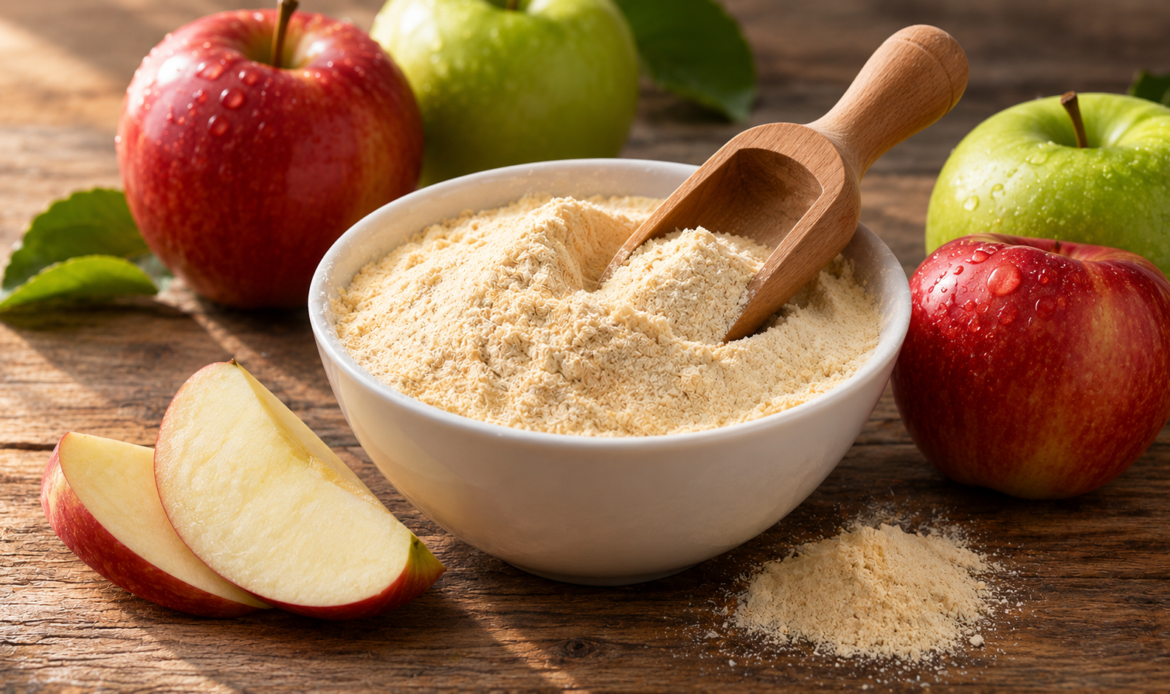
Apple powder is used in food manufacturing to add real apple flavor, natural sweetness, and fiber to products without adding water. Because it’s a dry, free-flowing ingredient, it blends straight into bar binders, cereal coatings, baking mixes, seasonings, and drink mixes where a wet ingredient like puree would throw off the formula. It’s made by drying apples to a very low moisture level and milling them, so a small amount carries a lot of fruit character. For product developers, it’s one of the simplest ways to put apple on an ingredient list in a form that behaves like everything else on a dry-blend line. Most formulas use it at a few percent of total weight.
How is apple powder made?
It’s made by drying apples until almost all the water is gone, then grinding the dried fruit and screening it to a consistent particle size. Some producers start from fresh apple pieces, and others mill already-dried, low-moisture apple dices.
The drying method shapes the finished product. Lower-temperature drying tends to keep a lighter color and fresher fruit flavor, while higher heat can bring out darker, caramelized notes. Particle size is set by screening, and it ranges from a fine, flour-like texture to a coarser granule. That size matters more than most people expect, because it changes how the ingredient disperses in a mix, how it feels in the mouth, and how fast it absorbs liquid.
Peel is another variable. Some producers mill whole apples with the peel on, which adds fiber and a slightly darker color. Others use peeled fruit for a paler, smoother result. Ask which approach your supplier uses if color or fiber content matters to your product.
Why use a fruit powder instead of fresh apple or puree?
Manufacturers choose a powder when they want apple flavor and solids without the water that comes with fresh fruit or puree. In a low-moisture product like a bar, a cracker, or a dry mix, adding water means adding drying time, shelf-life risk, or texture problems.
A powder also handles like the rest of the dry ingredients. It can be weighed, stored on a shelf, and blended in a ribbon mixer with flour, oats, or protein. There’s no thawing, no pumping, and no opened container with a short life once it’s been used. For plants that run dry-blend lines, that’s far easier to manage than a wet fruit ingredient.
There’s a cost angle too. Shipping and storing a dry ingredient is cheaper per pound of fruit solids than shipping a product that’s mostly water. That doesn’t make powder the right choice for every product, but it’s often the most efficient way to deliver apple flavor where moisture isn’t wanted.
How is it used in bars and cereal?
In bars, the powder works as a flavor source, a mild natural sweetener, and part of the binding system. It holds onto moisture well, which helps bars stay soft without raising water activity as much as liquid sweeteners do. Formulators often pair it with low-moisture apple pieces so the bar has apple flavor throughout and visible fruit on the surface.
In cereal and granola, it shows up in coatings and clusters. It can replace part of the sugar in a coating slurry while still giving an apple or apple-cinnamon profile. See our Cereal and Granola and Nutrition and Snack Bars pages for how these ingredients fit together.
How is it used in bakery and snacks?
Bakers add dried apple in powdered form to muffin and cake mixes, cookie doughs, fillings, and streusel toppings, where it adds flavor and natural sugars and helps baked goods stay moist. Since it brings fruit solids without water, it can intensify apple flavor in a recipe that already has enough liquid.
On the snack side, it goes into seasonings and dustings for chips, popcorn, and pretzels, often paired with cinnamon or caramel notes. It’s also used in fruit snacks and extruded snacks as part of the fruit content. Our Snacks and Bakery pages cover more of these uses.
Can it be used in beverages and pet food?
Yes. In drink mixes and smoothie blends, it adds body and a light fruit base that pairs well with stronger fruits. It doesn’t fully dissolve the way a juice powder does, since it contains the whole fruit’s fiber, so it works best where a little texture or cloudiness is acceptable.
In pet food and treats, apple is one of the fruits shoppers recognize on a label, and a powder is an easy way to include it in kibble, baked treats, and soft chews. Our Pet Food page covers fruit and vegetable ingredients for pet applications.
How does it show up on a label?
On an ingredient statement, the powder is usually listed in plain terms such as “dried apple” or “apple powder,” depending on the product and the supplier’s recommendation. That’s part of its appeal for clean-label products, since shoppers recognize it as fruit.
On the nutrition panel, its sugars come from the fruit itself. Whether those count as added sugars depends on how the ingredient is processed and used, so check current labeling rules with your regulatory team before making sugar claims. The fiber it brings can also help a product’s fiber content, though usually not enough on its own to support a fiber claim.
What specs should you check?
The most important specs are moisture content, particle size, and color, since they affect how the ingredient flows, blends, and looks in your finished product. A full spec sheet should also include:
- Water activity, which matters for shelf life and for how the powder interacts with other ingredients
- Particle size or mesh range, often given as a percentage passing through a set screen
- Any added ingredients, such as a flow agent to prevent caking
- Microbiological limits
- Shelf life and storage conditions
- Allergen statement and food safety certification
If you’re replacing an existing apple ingredient, ask for a sample and run it side by side in your formula. Two products with similar specs can still behave differently once they hit your mixer.
How should it be stored?
Keep it sealed, in a cool, dry place, and use it on a first-in, first-out basis. Fruit powders are hygroscopic, which means they pull moisture from the air, and a bag left open in a humid plant can turn into a hard block.
Once a bag is opened, reseal it tightly or move the contents to an airtight container. If your plant is humid in summer, plan smaller pack sizes or faster turnover. Caking doesn’t usually make the ingredient unsafe, but it slows production and can cause uneven blending.
Where does it fit with other dried apple formats?
Powder is one of several dried apple formats, and many products use more than one. Evaporated apples are softer and chewier with more moisture. Low-moisture apples are crisp and work well in cereal and dry mixes. Powder spreads apple flavor evenly through a product without visible pieces.
Unique Ingredients supplies apple powder, evaporated apples, and low-moisture apples, all stocked in regional warehouses so most orders arrive in one to two days. Before we buy from any source, our quality team is on site in the facility.
If you’re working on a new formula or comparing products, talk to our team about samples and spec sheets.
Frequently asked questions
Is it the same as apple fiber?
No. A whole-fruit powder contains the apple’s natural sugars, flavor, and fiber together. Apple fiber is a more concentrated fiber ingredient, usually made from the pulp left after juicing, with much less sugar and flavor.
Does it contain added sugar?
Most products are just dried apple, and the sweetness comes from the fruit’s own sugars. Some include a flow agent or a carrier, so check the ingredient statement on the spec sheet.
How much should I use in a formula?
It depends on the product and how strong you want the apple flavor to be. Many formulas use it at a few percent of total weight, especially when it’s combined with apple pieces or natural flavors. Bench testing is the best way to find the right level.
Why is my powder clumping?
Clumping usually means it has picked up moisture from the air. Keep bags sealed, store them away from humidity and heat, and use opened product quickly. A flow agent can help in very humid conditions.
Can I get a sample before ordering?
Yes. Samples ship from regional warehouse stock, so most arrive within days. Contact our team with your application and target specs.