

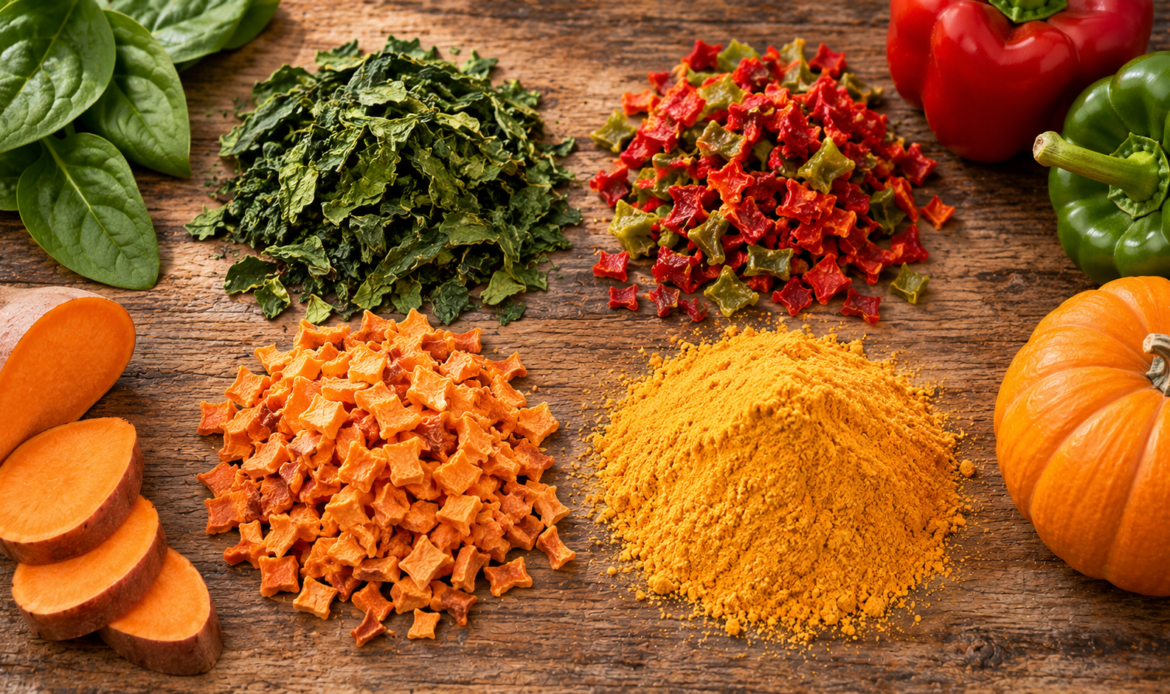
Bulk dehydrated vegetables are vegetables dried to a low moisture level and packed in large cases for food manufacturing, where they add color, flavor, and nutrition to products without adding water. Manufacturers use them in snacks, bars, soups, seasonings, sauces, pasta, and pet food, often as powders, flakes, or small dices. Before buying, it helps to know which format suits your process, which specs to ask for, and how vegetables behave differently from dried fruit. Vegetable inclusions are one of the faster-growing ingredient categories, so the right supplier and spec now can save a lot of reformulation later. Stored sealed, cool, and dry, most dehydrated vegetables keep for a year or more.
Why are manufacturers adding more vegetables to their products?
Manufacturers are adding vegetables because shoppers want recognizable, plant-based ingredients and more nutrition in everyday foods. A bar or cracker with spinach, sweet potato, or pumpkin on the label stands out on the shelf and supports the clean-label story many brands are trying to tell.
Pet food is a big part of this shift. Premium pet brands now use the same vegetables people cook with at home, and they want ingredient lists that read like a human food label. Vegetables also bring natural color, which helps brands move away from synthetic colors. Pumpkin and sweet potato add orange tones, spinach adds green, and red bell pepper adds red.
What formats do dehydrated vegetables come in?
Dehydrated vegetables come in several formats, and each one fits a different kind of product. The most common are:
- Powders, which blend evenly into doughs, batters, seasonings, and drink mixes
- Flakes, which add visible flecks of color to crackers, pasta, and snack seasonings
- Small dices or granules, which add texture and visible pieces in soups, bars, and pet food
- Larger dices or slices, mostly used in soup mixes, meal kits, and savory blends
The right format depends on whether you want the vegetable to be seen. A powder disappears into the product and delivers color and flavor evenly. A flake or dice shows the shopper that the vegetable is there, which can matter as much as the nutrition it adds.
How are vegetables dehydrated for manufacturing?
Most vegetables for manufacturing are washed, trimmed, cut, often blanched, and then dried with warm air until they reach a low moisture level. Blanching, a short dip in hot water or steam, helps stop natural enzymes that would otherwise change color and flavor during storage.
Other methods are used for specific products. Drum drying turns vegetable purees into thin sheets that are then milled into powder, which works well for sweet potato and pumpkin. Freeze drying keeps more of the original shape and color but costs more and produces a lighter, more fragile product. For most bars, snacks, and pet food, air-dried or drum-dried vegetables offer a good balance of quality and cost.
How do you rehydrate dehydrated vegetables in production?
In most products, you don’t rehydrate dehydrated vegetables as a separate step. They pick up water from the dough, batter, meat, broth, or sauce they’re mixed into. Powders hydrate almost instantly, flakes within minutes, and larger dices can take longer depending on temperature and cook time.
Where rehydration matters, plan for it. In a soup or sauce, larger pieces may need a few extra minutes of simmering to soften fully. In a dough or batter, vegetable powders absorb some of the water, so you may need to adjust the liquid in the formula to keep the same texture. In a low-moisture product like a bar or cracker, choose a small cut so the pieces don’t stay hard.
If your product is a dry mix that customers prepare at home, test rehydration using your package directions. That’s the experience your customer will have, and a piece that’s still crunchy after the stated cook time will show up in reviews.
How do dehydrated vegetables behave differently from dried fruit?
Vegetables behave differently from dried fruit mainly because they have less natural sugar. Fruit pieces stay chewy partly because of their sugar content, while dried vegetables tend to be crisp and can feel hard or woody if the moisture is too low or the pieces are too large.
That difference shows up in formulation. Vegetable powders don’t sweeten a product, so they’re easier to use in savory items. Larger vegetable pieces may need a longer hydration time in soups or a smaller cut size in bars. Vegetable flavors can also get stronger when concentrated, so a small amount of spinach or bell pepper powder can go a long way. Start low in bench testing and adjust up.
Which vegetables are most common in manufacturing?
Some of the most widely used dehydrated vegetables are onion, garlic, carrot, tomato, spinach, bell pepper, sweet potato, pumpkin, and kale. Onion and garlic are mostly seasoning ingredients, while the others are used for color, nutrition, and visible inclusions.
Unique Ingredients’ vegetable line focuses on four that are in growing demand across bars, snacks, and pet food:
- Spinach, for green color and a recognizable leafy-green label
- Bell pepper, for red and green color and savory flavor
- Sweet potato, for natural sweetness, orange color, and a familiar pet food ingredient
- Pumpkin, for orange color and fiber in pet food and baked goods
You can see the full line on our Dried Vegetables page.
What specs should you ask for when buying bulk dehydrated vegetables?
Ask for moisture, particle size, color, and microbiological limits first, since those four numbers decide how the ingredient performs and whether it fits your food safety program. Vegetables grow close to the soil, so micro specs deserve extra attention. A complete spec sheet should also cover:
- Water activity
- Any processing aids, such as an anti-caking agent in powders
- Defect limits, including foreign material and discolored pieces
- Shelf life and storage conditions
- Allergen statement and food safety certification
- Certificate of analysis for each lot
If your product is ready-to-eat with no further cooking, confirm the vegetable has been treated to reduce microbial load, and ask for the test results that show it.
How should dehydrated vegetables be stored?
Store them sealed, in a cool, dry place away from light, and rotate stock first in, first out. Dehydrated vegetables pick up moisture from humid air, and powders can cake quickly once a bag is opened. Light and heat can fade the color of green vegetables like spinach over time.
Most dehydrated vegetables have a shelf life of a year or more when stored correctly, but the exact number depends on the vegetable and format. Our post on shelf life covers storage in more detail, and the spec sheet should list the conditions that keep the product in spec.
How does supply work for dehydrated vegetables?
Like fruit, vegetables are crop-based, so supply and pricing move with the harvest. Weather in a major growing area can tighten supply for a specific vegetable, and some vegetables have only one harvest a year. Working with a supplier who sources from more than one processor helps you avoid gaps.
Unique Ingredients holds vegetable inventory in regional warehouses near major manufacturing markets, so most orders arrive in one to two days. Our quality team is on site at every source facility before we buy. If you’re adding vegetables to a new product or a pet food formula, talk to our team about samples and specs.
Frequently asked questions
Are dehydrated vegetables as nutritious as fresh?
Drying removes water, which concentrates many nutrients by weight. Some heat-sensitive vitamins, such as vitamin C, can be reduced during processing. Any nutrition claims should be based on testing of the actual ingredient.
What’s the difference between dehydrated and freeze-dried vegetables?
Dehydrated vegetables are dried with warm air, which makes them denser and more compact. Freeze-dried vegetables are dried by freezing and removing water under vacuum, which keeps more of their shape but makes them lighter, more fragile, and usually more expensive.
Can dehydrated vegetables be used in pet food?
Yes. Vegetables like sweet potato, pumpkin, and spinach are common in pet food and treats. Our Pet Food page covers how they’re used.
How much vegetable powder should I add to a product?
Usage levels vary widely by vegetable and product. Many formulas use a few percent for color and label appeal. Start with a small amount, since vegetable flavors concentrate when dried.
Can I get samples before ordering?
Yes. Contact our team with the vegetables and application you’re working on, and we’ll send samples from regional stock.