

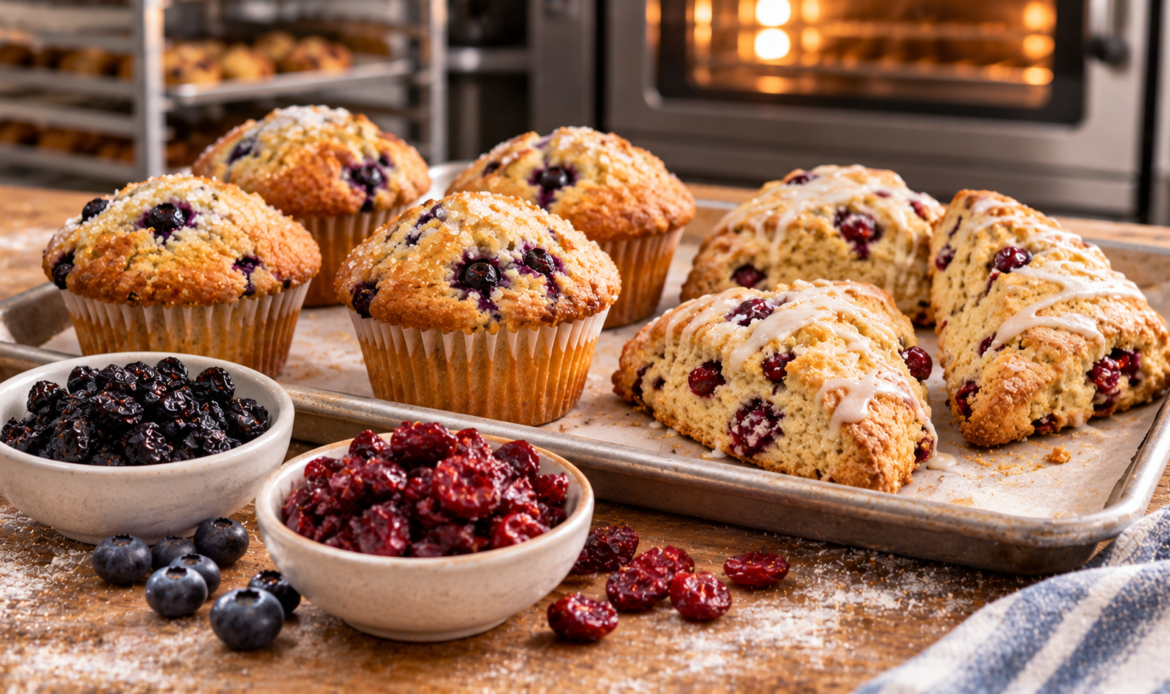
The best dried fruit for baking is fruit that holds its shape, keeps its color, and stays moist through the oven and the product’s shelf life. Infused cranberries, blueberries, and cherries are among the most reliable because the infusion syrup helps them stay tender and bake-stable. Evaporated apples, apricots, and pears also perform well in muffins, cookies, scones, and breads. The right choice depends on the product’s moisture, bake time, and the look you want, but in commercial baking, consistency from lot to lot matters as much as the fruit itself.
What makes a dried fruit bake-stable?
A bake-stable dried fruit keeps its shape, color, and texture through mixing, baking, and storage. Three things decide that: moisture, sugar content, and how the fruit was processed.
Fruit that’s too dry can pull water from the dough and turn hard after baking. Fruit that’s too moist can bleed, smear during mixing, or create wet spots around each piece. Infused fruit tends to be more bake-stable because the sugar from infusion holds water in place and helps the piece keep its structure in the oven. That’s why infused berries are a staple in commercial muffins, scones, and cookies.
Which dried fruits work best in baked goods?
Several dried fruits perform consistently well in commercial baking:
- Infused cranberries: hold their shape and bright red color, and their tartness balances sweet doughs
- Infused blueberries: add blue color and berry flavor with much less bleeding than fresh or frozen berries
- Dried tart and sweet cherries: hold up well in cookies, scones, and breads
- Evaporated apples: soften slightly in the oven and work well in muffins, breads, and fillings
- Apricots and pears: add a soft, chewy texture and mild flavor
- Infused strawberries: add color and flavor, though they’re softer and need gentler handling
Tropical fruits like mango and pineapple can also work, often diced, in quick breads and cookies. Banana is more often used as puree or powder in baking than as dried pieces.
How do you keep dried fruit from drying out the dough?
Match the fruit’s moisture to the dough, and adjust if needed. Very dry fruit pulls water from the dough as it bakes and sits, which can make baked goods stale faster and leave the fruit hard.
Bakers handle this in a few ways. Choosing a softer, higher-moisture or infused fruit is the simplest fix. Some bakeries briefly soak or plump dried fruit in water, juice, or syrup before adding it, though that adds a step and can make pieces sticky. Adjusting the liquid in the formula slightly can also help. Test the finished product a few days after baking, since moisture movement shows up over time.
How do you stop fruit from sinking in batter?
Fruit sinks when it’s heavier than the batter around it, especially in thin cake or muffin batters. Smaller cuts, lighter pieces, and thicker batters all help keep fruit suspended.
A common trick is tossing the fruit in a little of the recipe’s flour before folding it in. The coating helps the pieces grip the batter. Adding fruit at the end of mixing and folding gently also helps, since overmixing breaks down structure and lets fruit drop. In commercial production, cut size is usually the most reliable fix.
How do you prevent color bleeding?
Color bleeding happens when pigments from the fruit move into the surrounding dough or batter, which is common with blueberries and other dark berries. Dried and infused berries bleed far less than fresh or frozen berries, which is one reason they’re preferred in commercial bakeries.
To reduce bleeding further, add the fruit late in mixing, avoid overmixing, and keep batters cool. Batter pH also plays a part. Blueberry pigments shift toward green or gray in more alkaline batters, so formulas with a lot of baking soda can show more discoloration.
How do you keep fruit from burning on the surface?
Fruit on the surface of a baked good can scorch because it’s exposed to direct oven heat and contains sugar. Infused fruit, with its higher sugar content, is especially prone to darkening on top of muffins and scones.
Bakers reduce scorching by keeping most of the fruit inside the dough, lowering oven temperature slightly for longer bakes, or using a topping like streusel to shield surface pieces. If visible fruit on top is part of the product’s look, test a few placements and bake profiles to find the balance.
Which dried fruits are harder to bake with?
Some dried fruits take more care in baking. Very low-moisture fruit, like crisp apple dices made for cereal, can turn hard in a baked good because it pulls water from the dough. Soft fruits like infused strawberries can break down during mixing and leave streaks instead of distinct pieces. Banana and mango pieces can darken in long bakes because of their natural sugars.
None of these are reasons to avoid the fruit. They just mean the fruit needs the right moisture level, cut size, and handling for the product. Tell your supplier how the fruit will be used, including bake temperature and time, so they can recommend the best version.
How does dried fruit affect the shelf life of baked goods?
Dried fruit can either help or hurt shelf life, depending on how well its moisture matches the baked good. Fruit that’s in balance with the crumb helps keep the product moist. Fruit that’s too dry pulls water from the crumb and speeds up staling. Fruit that’s too wet can create moist spots where mold is more likely to start.
Check water activity on both the fruit and the finished product, and run storage tests at the shelf life you plan to print on the package. Infused fruits are often the easiest to keep in balance because their moisture is held tightly by sugar.
What cut size works best for baking?
Cut size depends on the product and the look you want. Smaller dices spread more evenly and are less likely to sink or tear thin doughs, which suits muffins, cakes, and cookies. Whole or halved fruit gives a more homemade look in scones, breads, and bars.
For high-volume production, smaller, consistent cuts usually run more smoothly through depositors and sheeters. Large or irregular pieces can clog equipment or create uneven portions. Talk with your supplier about cut sizes that suit both your product and your line.
What should bakers check on a dried fruit spec sheet?
Start with moisture, water activity, and cut size, since those decide how the fruit behaves in your dough and over shelf life. A complete spec sheet should also include:
- Ingredients, including any infusion syrup, oil coating, or processing aids
- Color and defect limits, including pits and stems for cherries
- Microbiological limits
- Shelf life and storage conditions
- Allergen statement and food safety certification
Ask about lot-to-lot consistency too. In commercial baking, a fruit that changes moisture between lots can change how a product bakes and how long it stays fresh.
Where can bakeries source dried fruit for baking?
Unique Ingredients supplies infused fruits, dried fruits, and dried apples for bakery applications, along with fruit purees for fillings. Because we hold stock in regional warehouses, most bakery orders arrive in one to two days. Every source we buy from has been visited by our quality team first.
Our Bakery page covers more on fruit in baked goods. If you’re developing a new product or replacing a fruit ingredient, talk to our team about samples.
Frequently asked questions
Should dried fruit be soaked before baking?
It’s not always needed. Infused and softer dried fruits can go straight into most doughs. Very dry fruit may benefit from a short soak, but test it first, since soaked fruit can make a dough wetter and stickier.
Why do dried cranberries stay soft after baking?
Infused cranberries keep sugar and moisture inside the berry, which helps them stay tender through the bake. That’s one reason they’re so common in commercial cookies and muffins.
Can I use dried fruit instead of fresh in a muffin recipe?
Yes, often in smaller amounts since dried fruit is more concentrated. You may need to add a little liquid to the recipe to make up for the water that fresh fruit would have contributed.
Does dried fruit need to be stored differently from other baking ingredients?
Store it sealed in a cool, dry place, away from strong odors. Infused fruit can get sticky in warm storage, so avoid spots near ovens.
Can I get samples for bake testing?
Yes. Contact our team with your product and process, and we’ll suggest fruits and cuts to test.