

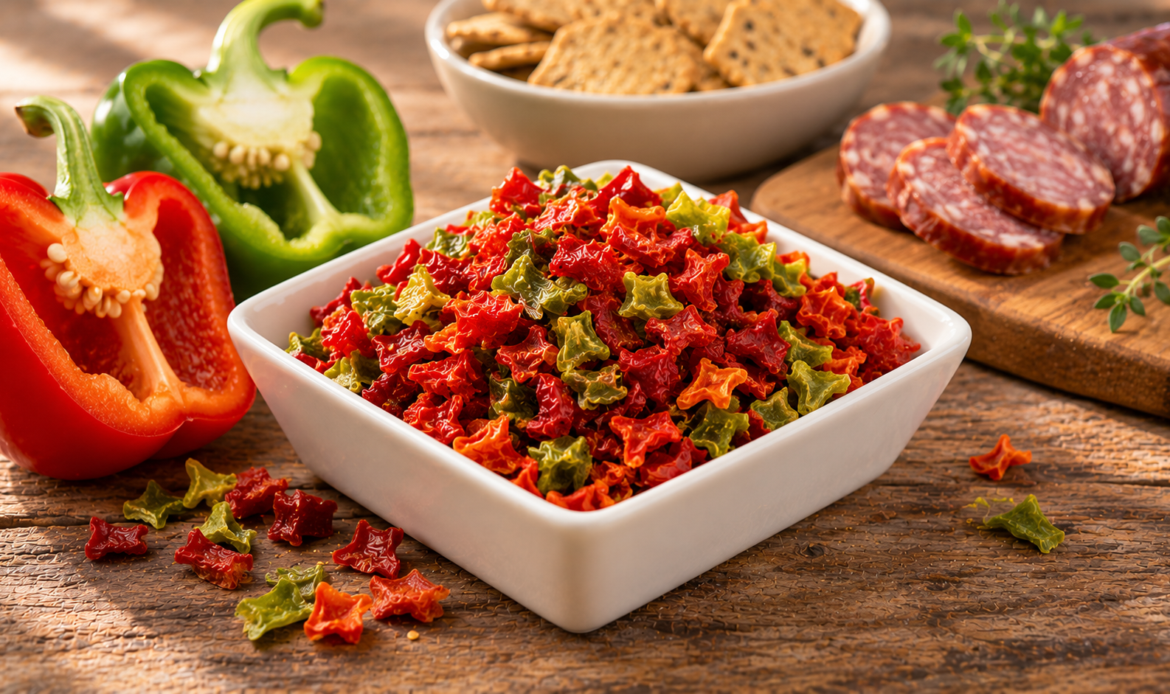
Dried bell pepper is used in savory snacks, sausages, seasonings, soups, and sauces to add bright red or green color, a mild sweet pepper flavor, and visible pieces without adding water or heat. It comes as dices, flakes, granules, and powder, so manufacturers can choose whether the pepper shows up as specks of color or blends into the background. Because it’s shelf-stable and easy to measure, it’s a practical way to bring a recognizable vegetable into products that would be hard to make with fresh peppers.
What is dried bell pepper?
It’s sweet bell pepper that’s been washed, cored, cut, and dried with warm air until very little water remains. Unlike chili peppers, bell peppers have no heat, so the dried product brings color and a mild, sweet vegetable flavor without spice.
Red and green are the most common colors. Red peppers are fully ripe, sweeter, and give a strong red color. Green peppers are harvested earlier and taste more grassy and vegetal. Some suppliers also offer yellow and orange, though they’re less common in manufacturing. A mix of red and green dices is popular in products that want a confetti look.
What formats are available?
Bell pepper is available in several formats, and the right one depends on how much you want the pepper to show. Common formats include:
- Large dices, often around three-eighths of an inch, for soups, meal kits, and products where pieces should be easy to see
- Small dices and granules, for sausages, snack seasonings, and crackers
- Flakes, which add thin specks of color to seasoning blends and dips
- Powder, which blends in completely and mainly adds color and flavor
Smaller cuts hydrate faster and spread more evenly through a product. Larger cuts make the vegetable obvious, which helps when the pepper is part of the product’s appeal.
How is it used in sausages and meat products?
In meat products, dried peppers add color, a mild sweet flavor, and the visible flecks shoppers expect in many sausage styles. They’re common in Italian-style sausages, breakfast sausages, bratwurst variations, meat sticks, and some deli products. Since the pieces are already dry, they don’t add free water to the meat blend, which helps with texture and shelf life.
Small dices and granules work best in ground and stuffed products, since large pieces can tear casings or show up as hard bits. The pepper usually rehydrates slightly from the moisture in the meat during mixing and cooking. Our Meat and Sausage page covers how fruit and vegetable ingredients work in meat applications.
How is it used in savory snacks?
In snacks, the pepper shows up in seasoning blends for chips, popcorn, pretzels, and crackers, and as visible pieces in baked crackers and snack mixes. Red pepper granules and flakes give seasonings a bright, appetizing color. In crackers, small dices add specks that tell the shopper there’s real vegetable in the product.
Pepper pairs well with onion, garlic, cheese, and herbs, and it’s often part of “garden vegetable” or “ranch” profiles. Our Snacks page covers how these ingredients fit into snack formulations.
What other products use dried peppers?
Soups, sauces, rice and grain mixes, pasta dishes, dips, salad toppings, and seasoning blends all use dried sweet peppers. In dry soup and meal mixes, larger dices give a homemade look and rehydrate during cooking. In sauces and dips, flakes and granules add color without changing texture much.
Bell pepper also shows up in some pet food and treat formulas as part of a vegetable blend, though sweet potato, pumpkin, and spinach are more common there.
How do dried peppers rehydrate?
Dried pepper pieces rehydrate when they come into contact with water, broth, or the moisture in a meat or dough. Small granules and flakes rehydrate in minutes, while larger dices can take longer, especially in cold applications.
If your product doesn’t have much liquid or a long cook time, choose a smaller cut so the pieces don’t stay hard. For products like dry soup mixes, test rehydration using the same cooking instructions printed on your package, since that’s how customers will experience it.
How much dried pepper should you use?
Usage depends on whether the pepper is there for color, flavor, or visible pieces. In snack seasonings, red pepper granules or powder are often a small percentage of the blend, with other spices doing most of the flavor work. In sausages and meat sticks, enough dices to show visible flecks in each slice is usually the goal. In soup and meal mixes, larger dices are used at higher levels because they’re part of what the customer expects to see.
Remember that drying concentrates flavor and weight. One pound of dried pepper replaces many pounds of fresh, so start low in bench testing and adjust. Too much can make a seasoning taste vegetal or muddy the color of a product.
How does dried pepper compare with frozen or fresh?
Dried pepper is easier to store and handle than frozen or fresh pepper, and it doesn’t add free water to a product. Frozen diced pepper keeps a softer texture closer to fresh, which suits refrigerated salads, frozen meals, and some sauces, but it needs freezer space and can release water as it thaws.
For shelf-stable products like snacks, dry mixes, seasonings, and many meat products, the dried form is usually the most practical choice. It stores at room temperature, measures easily, and keeps its color and flavor for months when packed and stored well.
How do you keep the color bright?
The red color in ripe peppers comes from natural pigments that fade with heat, light, and oxygen over time. To keep color bright:
- Store the product sealed, cool, and away from light
- Use oxygen-barrier packaging for the finished product when possible
- Keep high-heat processing as short as the product allows
- Watch shelf life on the finished product, since fading often shows up after several weeks
Green peppers can turn olive in acidic or long-heated products, similar to other green vegetables. Bench-testing over the product’s shelf life is the best way to see how the color will hold.
What specs should you ask for?
Ask for cut size, color, moisture, and microbiological limits first. Vegetables grow close to the soil, so micro specs are especially important for ready-to-eat products that won’t be cooked further. A full spec sheet should also include:
- Water activity
- Defect limits, including stems, seeds, and discolored pieces
- Any processing aids or flow agents
- Shelf life and storage conditions
- Allergen statement and food safety certification
- Certificate of analysis for each lot
If you’re switching suppliers, test samples in your actual product. Color and piece size can look similar in a bag and very different in a finished sausage or cracker.
Where can you source dried bell pepper?
Unique Ingredients supplies bell pepper as part of our Dried Vegetables line. Inventory is held in regional warehouses near major manufacturing markets, so most orders arrive in one to two days, and our quality team is on site at every source facility before we buy.
If you’re working on a sausage, snack seasoning, or soup mix, talk to our team about samples and cut sizes.
Frequently asked questions
Is dried bell pepper spicy?
No. Bell peppers have no heat. The dried product adds color and a mild, sweet pepper flavor.
What’s the difference between red and green?
Red peppers are fully ripe, sweeter, and more colorful. Green peppers are picked earlier and have a more grassy, vegetal flavor. Many products use both for color variety.
Do dried peppers need to be rehydrated before use?
Usually not. In meat, soups, sauces, and doughs, the pieces rehydrate from the moisture already in the product. In low-moisture products, choose a small cut so the pieces stay pleasant to eat.
How long do they last in storage?
Most dried peppers keep for about a year or more when stored sealed in a cool, dark, dry place. Color is usually the first thing to fade, so check the spec sheet for shelf life.
Can I get samples of different cut sizes?
Yes. Contact our team with your application, and we’ll suggest cuts to test.