

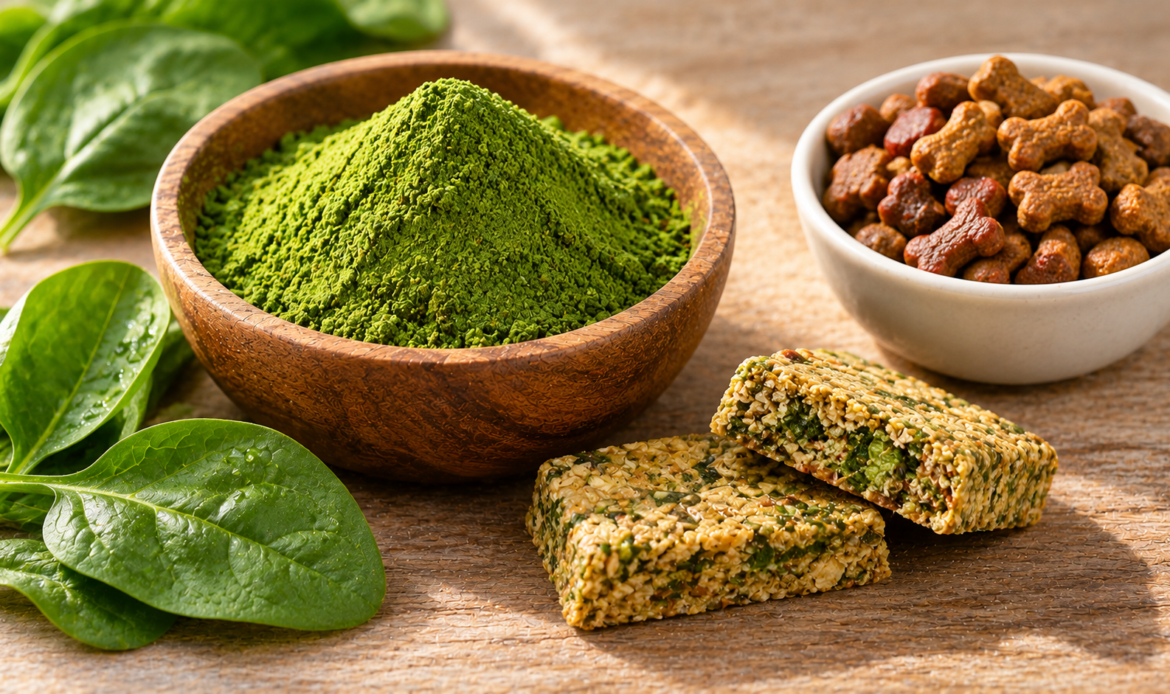
Manufacturers use spinach powder to add natural green color, a recognizable leafy-green ingredient, and a boost of vegetable content to bars, snacks, pasta, baked goods, smoothie blends, and pet food. Because it’s dried and finely milled, it blends evenly into doughs and dry mixes without adding water. A small amount goes a long way, both for color and flavor. As more brands move away from synthetic colors and look for vegetables that shoppers recognize, dried spinach has become one of the easier ways to put “greens” on an ingredient list. Most formulas use it at a few percent or less.
How is spinach powder made?
It’s made by washing and trimming fresh spinach, usually blanching it briefly, then drying the leaves and milling them into a fine powder. Blanching helps hold the green color and slows the natural enzymes that would otherwise cause browning and off-flavors during storage.
Drying method and temperature make a big difference. Gentle drying keeps a brighter green and a milder, fresher flavor. Harsher drying can turn the powder olive or brown and bring out stronger, grassy notes. Particle size is set during milling and screening, and finer powders disperse more evenly in doughs and liquids.
Why do manufacturers use dried spinach instead of fresh?
Manufacturers use dried spinach because fresh spinach is mostly water and spoils within days. In a bar, cracker, or dry mix, adding fresh or frozen spinach would mean adding water that has to be baked off or managed, which changes texture and shelf life.
The dried, milled form solves both problems. It stores on a shelf for months, measures like any other dry ingredient, and spreads evenly through a product. It also delivers a lot of spinach in a small amount, since roughly ten or more pounds of fresh leaves can go into a single pound of dried product, depending on the moisture of the fresh crop.
How is it used in bars and snacks?
In bars, dried spinach is usually a small part of a “greens” or vegetable-forward product, often alongside fruit to balance its earthy flavor. Apple, pineapple, and mango pair well with spinach in bars and bites, and the fruit sweetness keeps the green flavor in the background. Our Nutrition and Snack Bars page covers how vegetables and fruit work together in bars.
In snacks, the powder shows up in crackers, puffs, chips, and pretzel seasonings, where it gives a green tint and lets the brand call out spinach on the package. It’s often combined with garlic, onion, or cheese flavors in savory snacks. See our Snacks page for more.
How is it used in pet food?
Pet food brands use spinach as part of a mix of fruits and vegetables that shoppers recognize from their own kitchens. In kibble, baked treats, and soft chews, it adds green flecks or color and supports the premium, human-quality positioning many brands want.
Usage levels in pet food are usually low, and formulators often combine spinach with sweet potato, pumpkin, blueberries, or cranberries. Pet food has its own regulatory requirements and palatability needs, so work with your supplier on specs and with your nutrition team on levels. Our Pet Food page covers how these ingredients fit into pet formulations.
What other products use it?
Beyond bars, snacks, and pet food, dried spinach is common in fresh and dried pasta, where it gives the classic green color. It’s also used in breads, tortillas, wraps, smoothie and greens powder blends, soups, dips, and sauces.
In baked goods, it can tint doughs green for seasonal or vegetable-forward products. In smoothie powders and nutritional blends, it’s usually one of several greens. Because the color is natural, it’s a good fit for brands trying to remove synthetic colors from their products.
How does spinach compare with other green ingredients?
Spinach is one of several green vegetable ingredients, along with kale, broccoli, and various grasses and algae used in greens blends. Spinach stands out for its mild flavor and how familiar it is to shoppers. Most people already eat spinach, so it reads as an approachable vegetable on a label.
Kale has a stronger, more bitter flavor and a slightly different shade of green. Broccoli adds a more noticeable vegetable taste. Grass and algae powders deliver deep color but can be less familiar to mainstream shoppers and stronger in flavor. For a product that wants a gentle green color and a clean, recognizable vegetable on the ingredient list, spinach is often the easiest place to start.
Does it change a product’s nutrition label?
At typical usage levels, dried spinach adds small amounts of fiber, protein, and minerals, but usually not enough on its own to support a nutrient content claim. Its biggest effect on the package is usually the ingredient statement and front-of-pack messaging, where “made with spinach” or a vegetable callout can carry real weight with shoppers.
If you plan to make a nutrition claim, base it on lab testing of the finished product. Your regulatory team can confirm what wording fits the amount of vegetable in the formula.
How do you keep the green color from fading?
The green color in spinach comes from chlorophyll, which breaks down with heat, light, acid, and time. A few practical steps help hold the color:
- Store the powder sealed, away from light and heat
- Keep high-heat steps as short as the process allows
- Watch the pH of the finished product, since acidic formulas tend to turn green to olive
- Use opaque packaging for the finished product when possible
Some color change during baking or extrusion is normal. Bench-test your product and check the color again after a few weeks of storage, since fading often shows up over shelf life rather than on day one.
What specs should you check?
Start with color, moisture, particle size, and microbiological limits. Leafy greens grow close to the soil and can carry higher microbial counts than fruit, so micro specs deserve a close look, especially for ready-to-eat products that won’t be cooked further. A full spec sheet should also include:
- Water activity
- Any flow agent or other added ingredients
- Defect limits for foreign material
- Shelf life and storage conditions
- Allergen statement and food safety certification
- Certificate of analysis for each lot
If you need the powder for a product that isn’t cooked after mixing, ask whether it’s been treated to reduce microbial load and request the test results.
How much spinach powder should you use?
Most formulas use a small amount, often a few percent or less, because the color and flavor are strong. The right level depends on whether the goal is a light green tint, a noticeable spinach flavor, or a vegetable claim on the label.
Start low and adjust. Too much can make a product taste bitter or grassy and turn the color dark. Pairing spinach with fruit, cheese, or herbs can help balance the flavor at higher levels.
Where can you source dried spinach for manufacturing?
Unique Ingredients supplies dried spinach as part of our Dried Vegetables line, alongside bell pepper, sweet potato, and pumpkin. Inventory is held in regional warehouses near major manufacturing markets, so most orders arrive in one to two days, and our quality team visits every source facility before we buy.
If you’re working on a greens bar, a vegetable snack, or a pet food formula, talk to our team about samples and specs.
Frequently asked questions
Does it taste like spinach?
At low levels, it adds a mild, earthy note that most people won’t notice, especially when paired with fruit or savory seasonings. At higher levels, the spinach flavor becomes more obvious and can turn bitter.
Can it replace synthetic green color?
It can give products a natural green tint, but the shade is usually softer and more olive than synthetic colors. It works best when a natural, vegetable-based green fits the product.
Is organic spinach powder available?
Organic dried spinach is available from some suppliers. If you need it, ask for the organic certificate along with the spec sheet.
How long does it last?
Most dried spinach keeps for about a year or more when stored sealed in a cool, dark, dry place. Color is usually the first thing to change, so check the spec sheet for the shelf life and storage conditions.
Can I get a sample?
Yes. Contact our team with your application, and we’ll send a sample from regional stock.